
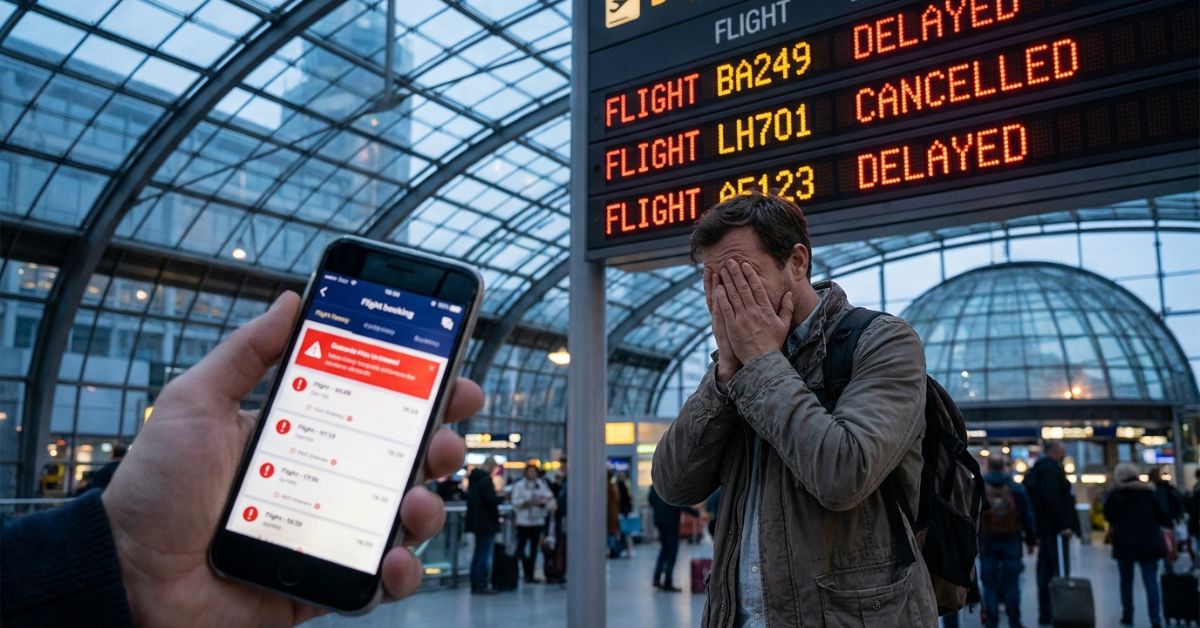
She stood at the gate, staring at her phone.
The notification said “Flight Delayed — Fuel Shortage.” Not canceled. Not weather. Fuel.
Her summer trip to Italy — the one she’d been planning for 18 months — was suddenly hanging by a thread. And she had no idea if she should get on the plane or go home.
That scene is playing out in airports right now. And if you’ve got Europe plans this summer, you’re probably wondering the same thing she was:
Should I cancel?
I spent the last week talking to travel agents, digging through fuel supply reports, and tracking flight disruptions across European airports. What I found surprised me.
The answer isn’t what you think.
The Advice No One’s Saying Out Loud
Here’s what one Phoenix-based travel agent told us — and she’s been booking international trips for over 15 years:
“Don’t cancel. But change how you move once you’re there.”
That’s not the headline you’re seeing on the news. Most coverage makes it sound like Europe’s about to run out of fuel and strand millions of tourists.
But here’s what’s actually happening.
Europe gets more than half of its fuel from Norway. That supply chain is still intact. The international flights leaving the U.S. in the evening and departing Europe in the morning? Those are mostly fine.
It’s the regional flights inside Europe that are the problem.
What’s Really Being Disrupted (And Why It Matters)
The issue isn’t that fuel is disappearing. It’s that day-to-day fuel availability is unpredictable in certain regional airports.
Think about it like this:
A flight from Phoenix to Paris? That’s a major route. High priority. Fuel gets allocated there first.
But a regional flight from Paris to Nice? Or Rome to Sicily? Those smaller routes are where the cracks are starting to show.
The travel agent we spoke with explained it like this:
“I don’t think it’s a situation where fuel is just going to stop becoming available in different markets, but rather it’s making sure on a day-to-day basis those last flights have enough fuel.”
Translation: The big international flights are protected. The little hops between countries? Not so much.
And that changes everything about how you should plan your trip.
The One Strategy That Actually Works
If you’re planning to visit multiple countries this summer, here’s what you need to hear:
Stop relying on regional flights.
The old plan used to look like this:
- Fly into London
- Fly to Paris
- Fly to Rome
- Fly to Barcelona
- Fly home
That itinerary is now a risk.
Here’s the new plan:
- Fly into London
- Take the train to Paris
- Rent a car and drive to the south of France
- Take the train through Italy
- Fly home from Rome
Same trip. Way less exposure to regional fuel disruptions.
And honestly? It’s a better trip anyway.
Why Trains and Cars Are About to Save Your Summer
I know what you’re thinking.
“But flying is faster. I don’t want to waste time on trains.”
Here’s the thing nobody tells you about European travel:
The train is often faster than flying once you factor in airport time.
A flight from Paris to Barcelona takes 2 hours. But you have to:
- Get to the airport (1 hour)
- Arrive 2 hours early for international flights
- Go through security
- Board
- Fly (2 hours)
- Land
- Get your bags
- Get from the airport to the city center (1+ hour)
Total time: 6–7 hours.
The train from Paris to Barcelona? 6.5 hours, city center to city center. No security lines. No baggage claim. You just sit down and go.
And you’re not worried about fuel shortages canceling your connection.
The Part That’s Not Getting Enough Attention
Here’s where the story gets more interesting.
The travel agent we spoke with said Europe isn’t even the continent being hit the hardest right now.
She’s seeing bigger disruptions in other regions — and she’s noticing travelers are starting to shift their plans because of it.
We’re going to break that down in detail, but here’s the short version:
If you’re flexible about where you go, there are destinations right now with better availability, better pricing, and way fewer headaches.
But if your heart is set on Europe — and honestly, I get it — you can still make it work.
You just need to be smarter about how you move.
What to Do If You’re Already Booked
Let’s say you’ve already got flights booked. Hotels reserved. The whole trip locked in.
Don’t panic.
Here’s what you should do:
1. Check your regional flights first
If your itinerary includes flights between European cities, those are the ones at risk. Pull them up and look at the airlines and routes.
Budget carriers flying into smaller airports? Higher risk.
Major airlines on high-traffic routes? Lower risk.
2. Build in buffer days
If you have a tight connection — like landing in Rome and flying to Athens the next morning — you’re asking for trouble.
Add an extra day. Give yourself room for delays. It’ll save you way more stress than it costs in hotel nights.
3. Have a backup plan for every leg
Before you leave, spend 30 minutes researching train and bus routes between your destinations.
If your flight from Paris to Lyon gets canceled, can you take a train instead? How long does it take? How much does it cost?
Know the answer before you’re standing at a canceled flight gate trying to figure it out on your phone.
The Bigger Shift Nobody’s Talking About
Here’s what I think is really happening.
This fuel issue is exposing something that’s been true for a while:
Over-reliance on cheap regional flights made European travel feel easier than it actually was.
For years, budget airlines made it possible to hop from country to country for $30. It was fast. It was easy. It felt like cheating the system.
But it also made travelers lazy.
We stopped thinking about trains. We stopped considering road trips. We stopped planning travel the way people did before Ryanair made everything feel like an Uber ride.
Now that those flights are getting disrupted, people are freaking out.
But the truth is, Europe was designed to be explored by train and car.
The infrastructure is incredible. The train networks connect almost everywhere. The highways are smooth. The rental car process is easier than in the U.S.
This might be the push people needed to actually travel better.
What You Should Do Right Now
If you’ve got a Europe trip coming up, here’s the action plan:
- Don’t cancel — unless your entire itinerary depends on regional flights
- Rework your inter-country travel — switch flights to trains or rental cars where possible
- Add buffer days — especially between major cities
- Research backup routes now — don’t wait until you’re stuck
- Monitor your flights closely — set up alerts for any schedule changes
And if you haven’t booked yet?
Now might actually be a great time to go.
A lot of people are canceling out of fear. That means lower demand. Lower prices. Fewer crowds at major tourist spots.
If you’re smart about how you move between countries, you could have one of the best summers in Europe in years.
The Final Thing That Matters
The woman at the gate — the one staring at the delay notification?
She got on the plane.
Her flight to Rome left three hours late, but it left. And once she landed, she didn’t book a single regional flight. She rented a car, drove through Tuscany, took the train to Venice, and said it was the best trip she’s ever taken.
Because she adapted.
The travelers who are going to have problems this summer are the ones who refuse to adjust. The ones who insist on sticking to the old playbook even when the game has changed.
The ones who are going to have incredible trips? They’re the ones who see this as an opportunity to slow down, see more, and actually experience Europe the way it was meant to be traveled.
So yeah — don’t cancel your trip.
Just change how you move.
What about you? Are you still planning to go to Europe this summer, or are you shifting to a different destination? Drop your thoughts below.