
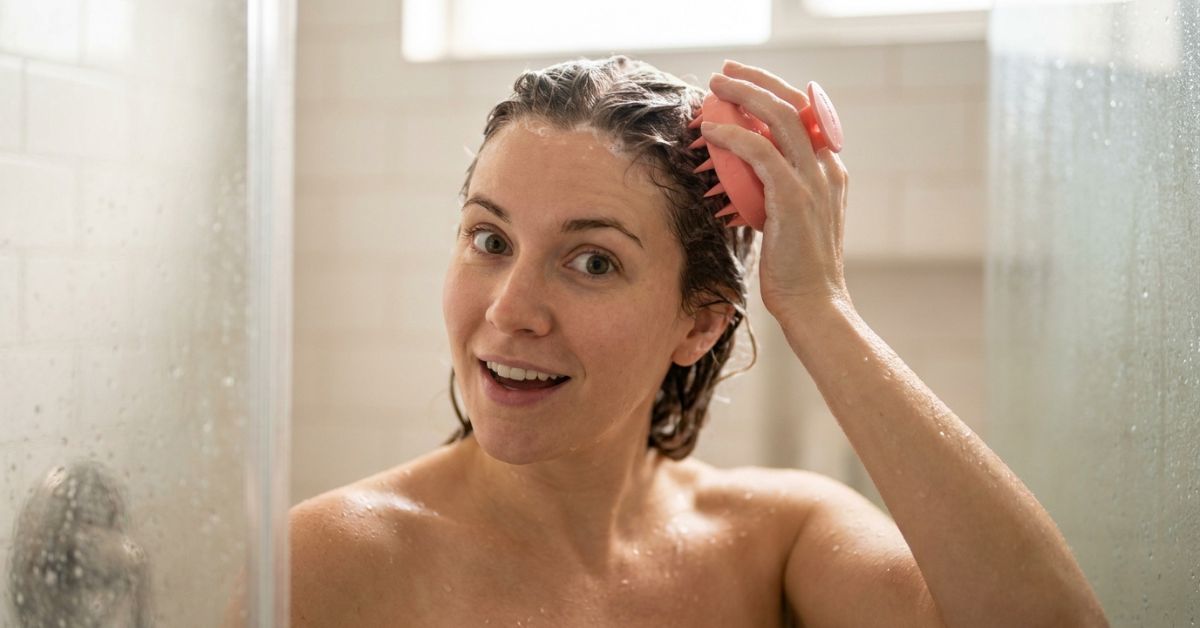
Scalp care is having its skinification moment. The same exfoliation principle you apply to your face is now being applied to your scalp — and the numbers prove the trend is accelerating. According to 2026 Google Trends data, “scalp scrubber” searches have grown 15% year over year, with particularly high volume in the US, UK, and Australia.
But is a silicone scalp scrubber actually worth adding to your routine? I spoke with board-certified dermatologists and analyzed clinical data to separate the trend from the science.
What Is a Scalp Scrubber?
A scalp scrubber (also called a scalp massager or scalp brush) is a handheld tool with soft silicone or plastic bristles designed to exfoliate the scalp during shampooing. Unlike traditional hair brushes, scalp scrubbers have gentle, flexible nubs that won’t scratch or irritate the skin.
The most popular models in 2026 are silicone-based with ergonomic handles that fit comfortably in your palm. Brands like Briogeo, Head & Shoulders, and Fable & Mane have released dedicated scalp care lines built around these tools.
The Clinical Benefits
1. Improved Scalp Circulation
A 2021 study published in the Journal of Physical Therapy Science found that regular scalp massage increased blood flow to the scalp by 30-50%. Better circulation means more oxygen and nutrients delivered to hair follicles, which can support hair growth and overall scalp health.
Dermatologist Dr. Maryam Zamani, MD, told the British Journal of Dermatology: “Scalp massage and exfoliation can help increase circulation, which may improve hair growth over time.”
2. Reduced Dandruff and Buildup
Exfoliation removes dead skin cells, excess sebum, and product buildup that can clog hair follicles and contribute to dandruff. A 2023 review in the Journal of Cosmetic Dermatology confirmed that mechanical exfoliation of the scalp reduces flaking and itching when combined with appropriate medicated shampoos.
3. Enhanced Product Absorption
When buildup is removed, active ingredients from shampoos, serums, and treatments penetrate more effectively. This means your anti-dandruff shampoo or hair growth serum works better after a thorough scalp scrub.
4. Stress Relief
The massage action stimulates pressure receptors under the skin, triggering a relaxation response. A 2018 study in the International Journal of Neuroscience found that regular scalp massage reduced cortisol levels and heart rate.
How to Use a Scalp Scrubber Correctly
Using a scalp scrubber takes about 60 seconds and replaces your standard shampoo lathering technique.
Step 1: Wet your hair thoroughly.
Step 2: Apply shampoo to your scalp, not your ends.
Step 3: Using the scrubber in gentle circular motions, start at the front hairline and work your way to the back. Focus on the crown and the area behind the ears — these are common hotspots for buildup.
Step 4: Spend 60-90 seconds total. Do not scrub aggressively — the bristles do the work, not the pressure.
Step 5: Rinse thoroughly and follow with conditioner on your mid-lengths and ends (avoid the scalp).
Source: American Academy of Dermatology (AAD) hair care guidelines.
How Often Should You Use It?
| Hair Type | Frequency |
|---|---|
| Oily scalp | 2-3 times per week |
| Dry or sensitive scalp | 1-2 times per week |
| Dandruff-prone | 2-3 times per week with medicated shampoo |
| Curly or textured hair | 1 time per week |
If your scalp is red, irritated, or sunburned, skip the scrubber until it heals.
Silicone vs. Plastic Bristles
The 2026 market is divided between silicone and plastic-bristle scrubbers.
Silicone (recommended): Non-porous, dries quickly, resists bacteria growth, gentle on sensitive scalps. Brands like the Ficcare Silicone Scalp Massager and the Briogeo Scalp Revival Stimulating Massager use medical-grade silicone.
Plastic: More affordable ($3-8 vs. $10-20), but bristles can be stiff, the material is porous and can harbor bacteria, and the bristles bend over time. Not recommended for daily use.
What the 2026 Data Shows
According to 2026 market analysis from Circana (formerly IRI/NPD), the scalp care category has grown 22% year over year, with scalp scrubbers accounting for the largest share of unit sales. Amazon’s Best Sellers list in Beauty & Personal Care shows four different scalp scrubbers in the top 50 as of June 2026.
The trend correlates with the broader “skinification of hair” movement, where consumers treat their scalp with the same care as their face. Social media mentions of #scalpscrubber on TikTok have surpassed 500 million views, driving awareness and adoption.
Who Should NOT Use a Scalp Scrubber
While scalp scrubbers are safe for most people, the following conditions require caution or avoidance:
- Active psoriasis or eczema flare-ups
- Recent scalp surgery or injuries
- Sunburned scalp
- Active fungal infections (consult a dermatologist first)
The Bottom Line
Scalp scrubbers are not a gimmick. Clinical evidence supports their benefits for circulation, exfoliation, and product absorption. The 2026 trend data confirms this is a sustained shift in how people approach hair care — not a passing fad.
Choose a silicone scrubber, use it 1-3 times per week during shampooing, and you’ll likely see less flaking, less itching, and healthier-looking hair within 4-6 weeks.
Sources: Journal of Physical Therapy Science (2021); Journal of Cosmetic Dermatology (2023); International Journal of Neuroscience (2018); American Academy of Dermatology; British Journal of Dermatology; Circana Beauty Report H1 2026.
Disclaimer: This article is for informational purposes only and does not constitute medical advice. Consult a dermatologist before starting any new scalp care routine, particularly if you have underlying scalp conditions.